
To be honest, most small and medium-sized family law firms fail when trying to get clients from Google Ads. Here’s why: Family law cases are inherently emotional and complex, yet many firms approach pay-per-click with a one-size-fits-all strategy that just doesn’t work. Between skyrocketing costs, mismanaged budgets, poor targeting, and a failure to address the emotional needs of prospective clients, it’s no wonder that so many family law PPC campaigns fall flat.
In this post, we’ll break down the most common pitfalls that family law firms encounter when running PPC Ads campaigns. We’ll explore why high costs and raw, unqualified leads can sabotage your efforts, and how automated bidding and offline conversions play a critical role in measuring success.
We’ll also discuss the importance of emotional messaging and efficient lead intake processes, and reveal the risks of partnering with inexperienced PPC agencies.
By understanding these challenges and learning actionable strategies to overcome them, you can transform your PPC approach and start converting clicks into real, paying clients. Let’s dive in.
The High Cost of PPC for Family Law Firms
Family law PPC is expensive because the competition is intense – and that competition is driven by the high lifetime value of a family law client. Law firms know that each client can generate substantial revenue over time, so they’re willing to pay a premium for clicks. This aggressive bidding environment means that every click costs more, as firms compete to capture the attention of prospects who are potentially ready to hire immediately.
However, without precise management, costs can spiral out of control. Ineffective targeting or generic ad copy can attract unqualified traffic, driving up expenses without delivering the right clients. The key is to ensure that every click counts by focusing on strategies that hone in on prospects actively seeking family law services in the search results. This means smart budgeting, refined keyword targeting, and a well-calibrated approach to bid management – all of which are essential for maximizing ROI while keeping costs in check.
Low ROI, Poor Lead Quality, and the Importance of Offline Conversions
Many marketing agencies set up PPC campaigns that focus on maximizing raw leads – phone calls and form fills – without differentiating between high-quality inquiries and those that aren’t a good fit. Google’s automated bidding systems optimize for conversions, but when every lead is treated the same, the system favors cheaper, less qualified interactions. This can inflate your conversion numbers on the dashboard while leaving you with a poor return on investment.
For family law firms, a valuable conversion isn’t just any lead – it’s one that shows genuine intent to hire legal services. Some agencies, such as Baltzer Marketing, provide systems to grade your leads so you can indicate when a lead is qualified. This process can also be set up with any CRM that allows you to score or grade leads, and a good agency will help you implement it. By ensuring that only qualified leads are fed back as conversions, you help Google’s automated bidding learn to prioritize quality over quantity.
This, in turn, directs your budget toward acquiring clients who truly bring value to your practice.
Budget Constraints and Mismanagement
Family law PPC campaigns demand a realistic and well-managed budget. Given the high lifetime value of each potential client, firms are willing to invest heavily – but only if every dollar is well spent. Unfortunately, many agencies and in-house efforts fall short by either under-budgeting or mismanaging available funds.
Tight budgets can prevent campaigns from gathering enough data or reaching the right audience. Conversely, ineffective spending – such as wasting money on broad keywords without proper lead grading and offline conversion tracking – can quickly drain funds without delivering valuable leads. The challenge is to strike the right balance: ensuring you invest enough to be competitive while avoiding overspending on low-quality interactions.
Effective budget management for family law PPC involves continuous monitoring and adjustments. This means closely tracking spending, analyzing performance data, and reallocating funds to the most promising keywords and demographics. Whether managed in-house or through a specialized agency, a strategic approach to budgeting is essential for maintaining a healthy return on investment.
Targeting Mistakes and Campaign Setup
Targeting is crucial in any PPC campaign, but for law firms, it’s especially important to get it right. Common mistakes include choosing overly broad keywords, neglecting localized geo-targeting, and failing to implement robust negative keyword strategies. These errors can lead to wasted spend on clicks from audiences that aren’t in your service area, aren’t looking for family law services, or are simply seeking free help rather than ready-to-hire legal assistance.
In addition to keyword issues, the setup of your ad copy and landing pages plays a critical role. Poorly written ads that lack specificity or relevance, combined with landing pages that aren’t optimized for conversion, can drastically reduce your campaign’s effectiveness in attracting new clients. A well-constructed campaign should speak directly to your target audience’s needs and guide them toward taking the next step.
To avoid these pitfalls, focus on refining your keyword strategy to include long-tail and location-specific terms. Use negative keywords to filter out irrelevant traffic and ensure your ad copy is tailored to resonate with individuals seeking family law assistance – not just any legal information. Coupled with optimized landing pages designed to convert, these best practices help create a cohesive, targeted campaign that maximizes your advertising dollars and drives quality leads to your firm.
Emotional Messaging and Copywriting for Family Law
Family law cases are deeply personal and emotionally charged – divorce, child custody, and related issues evoke intense feelings. Yet many ads and landing pages simply list services or urge prospective clients to “schedule a consultation,” without connecting on a human level. This dry messaging often fails to resonate with individuals facing one of the most stressful times in their lives.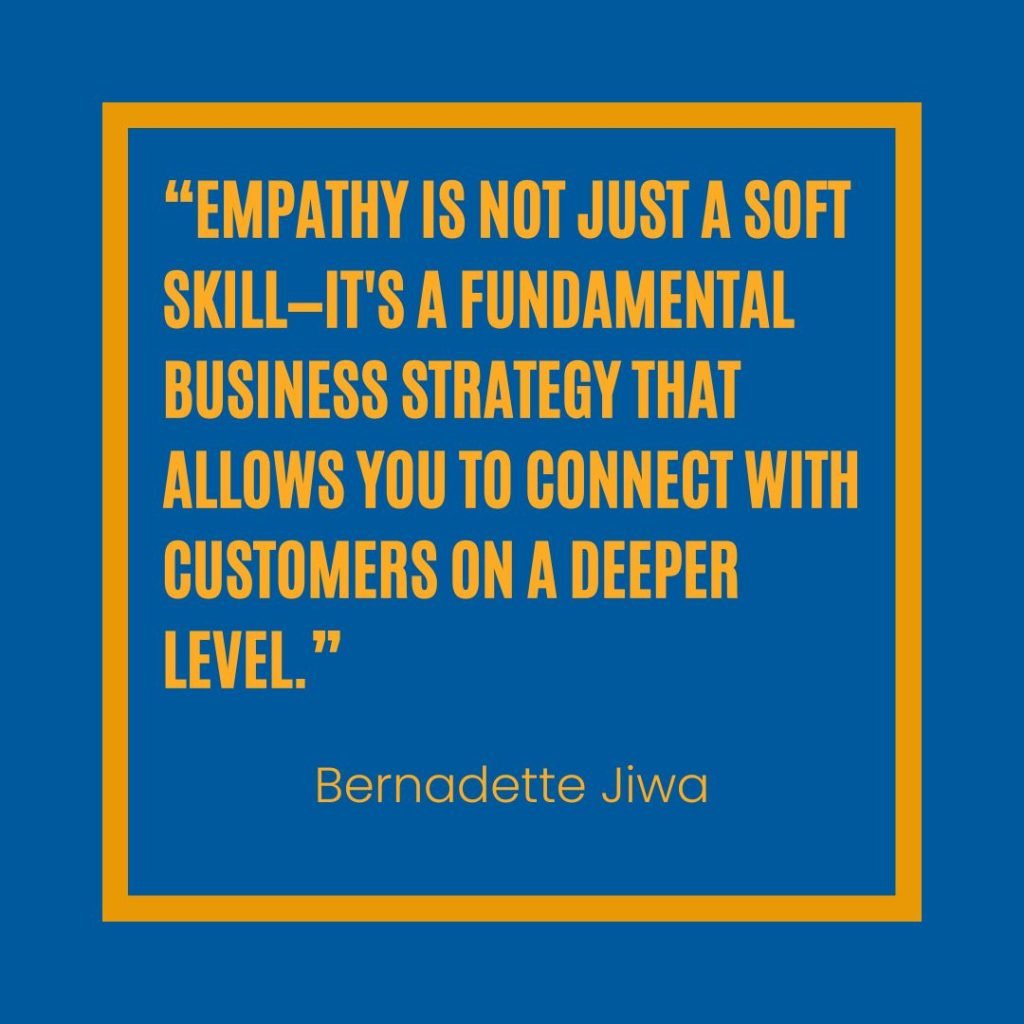
To truly engage potential clients, your messaging must express genuine empathy. As Bernadette Jiwa puts it, “Empathy is not just a soft skill – it’s a fundamental business strategy that allows you to connect with customers on a deeper level.” Effective copy should acknowledge your audience’s emotions, validate their experiences, and offer reassurance that your firm understands both the legal and emotional challenges they face.
Instead of merely stating your services, craft messages that speak directly to the hardships your prospects are experiencing. Highlight how your firm eases the stress of complex family law matters by providing clear, compassionate guidance through the process. By incorporating empathy into your ad copy, landing pages, and intake process, you build trust from the very first click – differentiating your firm and increasing the likelihood that potential clients will feel understood and choose your services when they need legal representation.
The Crucial Role of an Effective Lead Intake Process
A well-designed PPC campaign is only as effective as the system that follows up with the leads it generates. Even the most finely-tuned ad can fail if there’s no efficient process to engage prospects immediately. In family law, timing is critical – prospects in crisis won’t wait around. If your lead intake process is slow or cumbersome, even the best clicks can evaporate into missed opportunities.
Automation plays a pivotal role in ensuring that every inquiry is followed up instantly. By integrating tools such as CRM systems, auto-responders, and instant call notifications, your firm can guarantee that no potential client slips through the cracks. When leads are promptly contacted and nurtured, the likelihood of converting a simple inquiry into a client who genuinely needs legal services increases significantly.
Equally important is the quality of the initial human interaction. Having a friendly and professional receptionist is crucial; this empathetic first contact reinforces your firm’s compassionate messaging and sets a positive tone for the entire client experience. Combined with effective automation, ensuring that every qualified lead is handled with care and urgency maximizes your PPC investment and builds lasting trust with prospects during challenging times.
Pitfalls of Working with PPC Agencies for Family Lawyers
Working with PPC agencies can be a double-edged sword for family law firms. While some agencies bring the expertise necessary to run a successful campaign, others fall short – often due to a lack of specialized knowledge in family law. Generic strategies that work for other industries may not translate well in the legal arena, where every nuance matters.
Many agencies promise big results but end up using cookie-cutter approaches. This often leads to issues like broad keyword targeting, underutilization of lead grading systems, and ineffective messaging. Without a deep understanding of the family law landscape, these agencies might focus on vanity metrics rather than actual client acquisition, leaving you with inflated numbers on a dashboard but few, if any, quality leads.
Moreover, mismanagement can further drain your budget. When agencies don’t fine-tune bids or optimize campaigns based on data, funds are wasted on unqualified traffic. The result is a campaign that looks promising on paper yet fails to deliver real, actionable outcomes.
To avoid these pitfalls, it’s essential to work with partners who have proven experience in family law marketing. A well-informed agency will tailor strategies specifically for your practice, ensuring every element – from targeting and messaging to lead grading and follow-up – is optimized to attract the right clients.
Partner with Baltzer Marketing to Transform Your PPC Results
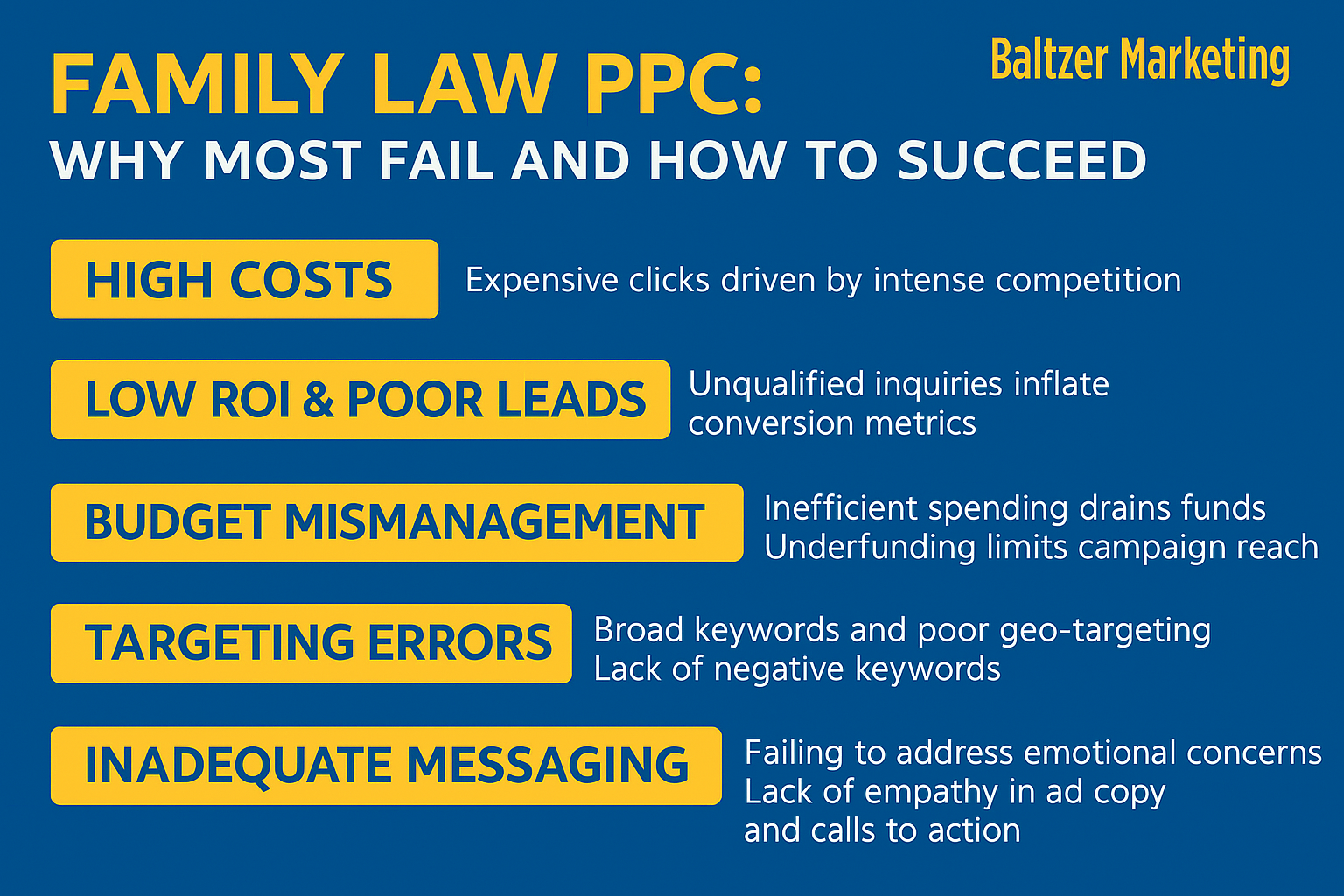
Effective PPC advertising for family law firms hinges on addressing several critical pitfalls: high costs driven by fierce competition, low ROI from unqualified leads, budget constraints and mismanagement, targeting mistakes, and the need for empathetic messaging coupled with efficient lead intake processes. Additionally, partnering with an agency that truly understands the family law landscape is essential.
At Baltzer Marketing, we have over a decade of experience working with family law firms. We know how to refine your PPC strategy to ensure every click counts, using tailored targeting, robust lead grading, and compassionate messaging to attract the right clients.
Ready to transform your PPC results? Book a discovery call with us today and let’s discuss how our specialized approach can help your family law firm achieve a higher return on your advertising spend.